HULU’s The Handmaid’s Tale Season 1 Analysis and Commentary

THTS1ArmyCrop

They Should Never Have Given Us Uniforms If They Didn’t Want Us to Be an Army.

After watching the 2017 Emmy Awards, Metamaiden and I finally got around to our long-planned rewatch of HULU’s The Handmaid’s Tale. We watched it when it aired weekly in the spring, along with everyone else, and loved it. I didn’t write weekly recaps because I know the book, having read it in the 80s, and I haven’t figured out how to write about ongoing series based on a book that I already know.

So, after binge rewatching the entire season, we present to you the compromise post: our typical season ending discussion.


Review

I’m not going to bother with much of a review. This series has won 8 Primetime Emmy Awards, and every one of the winners for Handmaid’s Tale deserved it. There could have been multiple winners in the various outstanding actress categories. The acting, cinematography, production design, and direction all deserve the many accolades they’ve received.

Continue reading “HULU’s The Handmaid’s Tale Season 1 Analysis and Commentary”

A Vagina for a Face: The Monsters, Men and Women of Stranger Things Season 1

STTheDemogorgon

Ridiculous, Epic Amounts of Analysis, Commentary and Questions, Just in Time for Season 2

I have a lot of thoughts on Eleven, the Upside Down monster, and the other female characters from Stranger Things, going in several different directions. I want to explore as many of them as possible, so this is going to be another rambley post that goes all over the place. (Like I ever write anything else.) I’ll throw in some character analysis of the boys as well, since not all of them fall into the monster category. 😘


Who Is El?

Before we get to El, let’s look at her nemesis, the Upside Down monster for a moment. The Upside Down monster turns out to have a lot in common with the Alien monster and the Thing. All are female and using human bodies to incubate their young. All three are unusual in that they have monstrous appearances, unlike most female monsters. All are relentless in their drive to kill humans, which is really a combination of survival instinct and the drive to reproduce that all species feel. The narrative never points this out with any of these monsters, even though you’d think a breeding mother would elicit some understanding.

El, the powerful counterpart to the Upside Down monster, is a prepubescent girl on the brink of womanhood/menstruation, discovering her power as a woman, feeling the hormones rise in her body. She bleeds every time she uses her powers to symbolize this, and because women are kept shackled in our society, so that they can’t turn on men or become too powerful.

Female superheroes are rarely intelligent, attractive, powerful, and emotionally well-adjusted all at once. There will always be at least one area in which they need men to guide and support them. Superman, Ironman, Captain America, and Batman all function fine without a woman, even though they each have flaws. But Buffy, Black Widow, the Scarlet Witch, Wonder Woman and Cat Woman are emotional messes, children or childlike, who need lovers, brothers and father figures to show them how to function in the world.

So El is weakened by the use of her powers, and kept ignorant of the world, leaving her easier to control and less likely to escape. In our culture, most men can’t handle watching women who are better than them and don’t need them. Since these shows are made by men, this says some interesting things about male psychology. A truly strong, confident man wouldn’t need to hold women, and even little girls like El, back, to make himself feel strong and necessary. Yet in show after show, we find women who are overtly powerful, but held back by excuses their male creators have made up to keep them tied to men long after a man would have become independent.

Continue reading “A Vagina for a Face: The Monsters, Men and Women of Stranger Things Season 1”

Elizabeth Cady Stanton: Why, What Have You Heard?

ElizabethCadyStanton-1848-Daniel-Henry
Look! A photo of Elizabeth Cady Stanton when she was young and hot. Now modern people, used to judging people based on their dress size, will be able to take her seriously.

This week’s episode of the Washington Post series Constitutional is titled Gender.* It’s hosted by Lillian Cunningham, with guests Library of Congress historian Julie Miller and Feminist Majority Foundation president Ellie Smeal.  This episode traces the fight to have women recognized by the US Constitution, allowed to vote, and then to be recognized as equal to men. It’s an excellent episode, informative and interesting, with some very early history that I had no idea existed. I encourage you all to listen to the podcast or read the transcript.

But the commenters also feel the need to critique the early suffragettes’ looks and fashion choices, which, to be fair, is a standard part of the discussion when the suffragettes come up. But, really? Do we mock Abraham Lincoln’s and Ulysses S. Grant’s looks and weight every time they come up? As female professionals, couldn’t these podcasters have taken a different approach?

Continue reading “Elizabeth Cady Stanton: Why, What Have You Heard?”

Frozen the Musical in Denver 8/19/17: Analysis and Comparison to 8/17/17

FrozenPgm&Stage8:19:17


It was great to see Frozen a second time time on Saturday night, the production’s third performance. The show had already made changes since Thursday night. Most noticeably, the lighting has been upgraded, which makes everything look more polished, and helps the ice effects. I still feel like they come up short in several places, but the stronger lighting added depth and sparkle that wasn’t there on Thursday. The improved lighting makes the whole production feel much more like it’s ready for Broadway instead of  community theatre.

Continue reading “Frozen the Musical in Denver 8/19/17: Analysis and Comparison to 8/17/17”

Dear Evan Hansen Rants: Why Does Evan Lie? (part 1)

Evan and the Murphys - For Forever

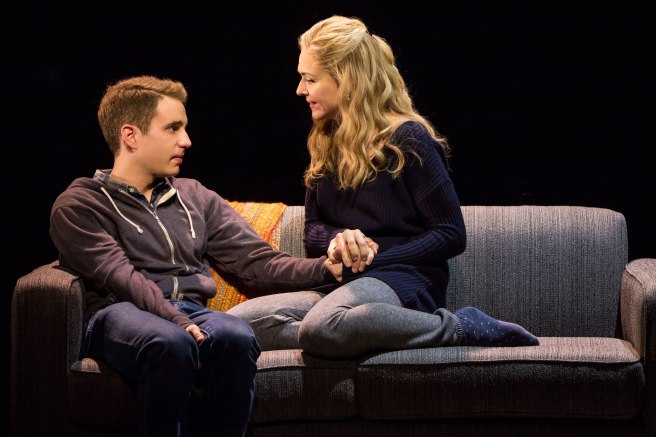
In the musical Dear Evan Hansen, the title character, a depressed, anxious, socially awkward teenage boy named Evan, spends much of the show living a lie. Evan convinces the family of a classmate who took his own life that Evan and the other boy, Connor, were friends, even though they barely knew each other when Connor was alive.

Many viewers seem to think that Evan is selfish and manipulative, and that he purposefully lies to Connor’s family, the Murphys, and others in order to take advantage of everyone else and use them for his own purposes. I completely disagree with that interpretation. I think that the show makes it clear to us that Evan is not the user in the show – the users are the people who push him into going with the falsehood that the Murphys assumed to be true. Evan’s fellow students Jared and Alana, and Conner’s parents Larry and Cynthia, whether intentionally or unintentionally, guilted, pressured, and scared Evan into continuing the lie.

At a certain point, Evan did fall into perpetuating the lie himself, and become a more confident participant, but he never initiated any of it. And – most importantly – when going along with the lie will help the Murphys find comfort, Evan does. When it will only harm them further, he tells them the truth. That’s how we really know what his true motivations were, even regardless of how active a participant he was in the lie: he lies to help the Murphys; then he tells the truth to help the Murphys.

Before we go any further, let’s establish some facts about the show, and some of my opinions that have bearing on the conclusions I’ll be drawing here.

  • Alana is a flat-out narcissist, while Jared is an everyday bully. Neither value the truth, only furthering their own interests. The difference between them is that Alana is ambitious about it and takes control of situations while Jared just takes whatever opportunity is in front of him in the moment.
  • Larry and Cynthia are grieving parents who don’t want to believe that the note that they think is all they have left of their son is really some stranger’s creation, and don’t let Evan tell them otherwise. They dismiss him as being in shock. Evan does tell the truth in the beginning. They don’t want to hear it.
  • Zoe, on the other hand, is very doubtful of the lies Evan tells and, rather than insisting to him that the truth is false, she points out all the flaws in his accounts, like she’s searching for falsehoods in it. Or has an analytical mind that sees straight to the truth, which is my belief.
  • Evan has a natural tendency to try to make people feel better. He does this both because he’s a genuinely good person and because he’s so uncomfortable with social situations that he tries to keep everyone around him from getting upset and putting more pressure on him than he already feels.

Continue reading “Dear Evan Hansen Rants: Why Does Evan Lie? (part 1)”

Dear Evan Hansen Rants: Evan and His Mom

Evan and Heidi

Ooohkay, I have a lot of thoughts on this show, which is funny because I have a lot of issues with it but I also have a lot of meta about it. Who knows how many parts to this there will be. Whichever part comes first will have a hint of some other parts of my analysis, because no piece is complete without the rest, but I’d have to publish a novel to do it all at once. To start, here’s my analysis of one of the most crucial relationships in the show – Evan and his mom, Heidi.

When the world sees Evan’s “Dear Evan Hansen” note*, thinking it was Connor’s suicide note, they’re horrified by how badly it implies Connor’s parents treated him. But those were Evan’s words. What does that say about Heidi? Heidi is the only one, besides the Murphys, who knows it was Evan. And it makes her realize how distant she’s been. She has the same reaction that the rest of the world had towards Connor’s family, but towards herself. As the “you are not alone” line from You Will Be Found plays after Alana shares the note, images of the letter and people’s reactions to it swirl around, and Heidi is briefly in the center of it, looking up at the images. We’re seeing her react to it, really seeing her son for the first time since his father left. She’s being confronted with how far she’s wandered from being the parent she’d intended to be, and how much that’s hurt Evan.

A person’s childhood and parenting shape who they are. Examining Evan’s mother and father, it’s clear how he ended up with the issues he has. Heidi is so exhausted and overextended from working hard just to keep herself and her son afloat and trying to get them a better life by going to school that she doesn’t have anything left for Evan emotionally. Understandably, she needs him to be okay so that she can focus on work and school. In many ways, he is her whole world. Everything she does, from spending so much time at work, to going to school, to looking for ways to get Evan into college, is for him. She is trying. When she hears about Connor’s suicide, she’s concerned about Evan’s reaction to it and tries to reach out to him. She asks him regularly if he still has enough pills and reminds him and encourages him to do the assignments his therapist gives him. She loves him dearly and is doing the best she can, and it’s not her fault that she’s only human and can’t be everything Evan needs.

That said, she also isn’t doing as well as she could. She hasn’t set aside a regular night, perhaps every Saturday or Sunday night, for them to have dinner together. Instead, as Evan points out, she randomly takes nights off without asking him or letting him know about it beforehand and expects him to drop everything and spend time with her.

Continue reading “Dear Evan Hansen Rants: Evan and His Mom”

The OA Season 1 Analysis and Speculation

TOAPrairie&Violin

This show is a meta writer’s dream. So many layers, twists and turns, fantastic complex characters, and questions of sanity.

To start with the broadest layer, one way to look at the story is as a metaphor for science and practicality vs art and religion. Hap, Elias, the psychiatrists, the adults of Crestwood, and the weapons represent science and the practical world. Prairie, Russia, her biological father Roman, and the other captives represent art and religion. Prairie’s present day team represents the battle between the two in our communities and schools. At Alfonso’s scholarship dinner, one of the businessmen even brings up the idea after listening to Buck sing. What good is art, since it’s not practical? Elias gives Alfonso an unsatisfying, roundabout answer in episode 8, by implying that Prairie turned whatever really happened to her into a mythological hero’s journey as a way for her and for them to be able to cope with it more easily. The problem is that Alfonso, like many in our culture, can only see that maybe there was some poetic framing in the way Prairie told the story, and thinks that makes the whole thing a lie, thus useless. He forgets the changes the group’s time with Prairie has made in all of them, and the easily verifiable parts of her story. The therapist forgets to mention those to Alfonso, too. She was gone for seven years. She has the physical hallmarks of captivity, like vitamin D deficiency. She did regain her sight. She has strange scars on her back. Something did happen to her, the science shows that. But it can’t tell us what. It can only give us theories. For the rest, we have to rely on Prairie’s memories and interpretations, even if we think she’s using poetic license or is an unreliable narrator because of mental illness or for other reasons (maybe Hap kept them on mild hallucinogens the entire time). Art and religion are the ways we express things when science and practicality fail us, because not everything can be put into those terms. It doesn’t make the metaphor less true, it’s just another way of expressing the truth. Not everything needs to be expressed in literal, factual terms to be true. Some truths can only be approached by circling them, slowly and metaphorically.

Continue reading “The OA Season 1 Analysis and Speculation”