Riverdale Season 1 Analysis and Review and Season 2 Speculation

RVD110Core4

Overall, this has been a great season on Riverdale, with a complex overarching plot and characters. I’ve enjoyed recapping it and keeping up with all of the literary references, which added a fun depth to the show. I now jump every time someone makes a reference on any show I watch, and assume it will have importance that spans the rest of the season. This doesn’t always pan out.

The cast are all amazing, especially Lili Reinhart, Cole Sprouse, Mädchen Amick, Skeet Ulrich, Madeleine Petsch, Marisol Nichols, and Luke Perry. They all dominate the scenes they are in. Even though Fred Andrews is one of my least favorite characters, Luke Perry is still a great actor. All of these actors, and many of the others, have given their characters mystery and nuance, even if they didn’t necessarily get much screen time, in the case of some that I didn’t list, like Ashleigh Murray, the actress who plays Josie McCoy.

The Gothic strand of the show’s story seems to be over, but I hope they keep the Noir aspect for the entirety of their run, and add in other genres to explore. This show would be so much less interesting if it was just about a group of small town high school kids. The creepy otherworldly atmosphere, the dark, seedy Noir lighting, Jughead’s voiceovers, read as if from a murder mystery novel that’s steeped in his existential alienation, and the costumes and sets that seem to be from someplace frozen in time, are all what make this show feel so unique.

Continue reading “Riverdale Season 1 Analysis and Review and Season 2 Speculation”

Agents of SHIELD: Why AIDA Deserves Compassion as an Enslaved Being [Updated]

MALLORY JANSEN

One major theme on season 4 of Agents of SHIELD has been “What is it that makes us human?” Is it our flesh and blood bodies? Our consciousness? Our memories? The choices we make? Our free will? Our genetics? Aida has passed from being an LMD, to a consciousness within the Framework, to a flesh and blood inhuman that was created with the help of the Darkhold. Through it all, she has retained the same memories and consciousness, and made many of her own choices, but has had little to no free will. Her choices have been made within the limits of her programming, primarily to fulfill the needs of others. She was able to circumvent her programming and create choices and an illusion of free will at times, but she had to find loopholes in her programming in order to do so.

Once she is out of the Framework and inhabiting her flesh and blood body, Coulson decides that Aida/Ophelia has rights as a person now that she is a “real” human. At the same time, Coulson disturbingly tells Fitz that nothing he did in the Framework matters because it wasn’t real, even though Fitz thought it was real at the time. Coulson and May will tell us later that those memories are as real to them as the memories of the lives they’ve physically lived. So why don’t Fitz’s decisions in that real-feeling place count, as far as how he feels about himself because of them? Why doesn’t Aida’s consciousness make her count as a real person, no matter what body it’s in? In the Framework, it was understood that the SHIELD captives were still real people, even though their consciousnesses were separated from their bodies. Presumably that should be true of Aida, and probably every other LMD and person in the Framework.

Continue reading “Agents of SHIELD: Why AIDA Deserves Compassion as an Enslaved Being [Updated]”

The OA Season 1 Analysis and Speculation

TOAPrairie&Violin

This show is a meta writer’s dream. So many layers, twists and turns, fantastic complex characters, and questions of sanity.

To start with the broadest layer, one way to look at the story is as a metaphor for science and practicality vs art and religion. Hap, Elias, the psychiatrists, the adults of Crestwood, and the weapons represent science and the practical world. Prairie, Russia, her biological father Roman, and the other captives represent art and religion. Prairie’s present day team represents the battle between the two in our communities and schools. At Alfonso’s scholarship dinner, one of the businessmen even brings up the idea after listening to Buck sing. What good is art, since it’s not practical? Elias gives Alfonso an unsatisfying, roundabout answer in episode 8, by implying that Prairie turned whatever really happened to her into a mythological hero’s journey as a way for her and for them to be able to cope with it more easily. The problem is that Alfonso, like many in our culture, can only see that maybe there was some poetic framing in the way Prairie told the story, and thinks that makes the whole thing a lie, thus useless. He forgets the changes the group’s time with Prairie has made in all of them, and the easily verifiable parts of her story. The therapist forgets to mention those to Alfonso, too. She was gone for seven years. She has the physical hallmarks of captivity, like vitamin D deficiency. She did regain her sight. She has strange scars on her back. Something did happen to her, the science shows that. But it can’t tell us what. It can only give us theories. For the rest, we have to rely on Prairie’s memories and interpretations, even if we think she’s using poetic license or is an unreliable narrator because of mental illness or for other reasons (maybe Hap kept them on mild hallucinogens the entire time). Art and religion are the ways we express things when science and practicality fail us, because not everything can be put into those terms. It doesn’t make the metaphor less true, it’s just another way of expressing the truth. Not everything needs to be expressed in literal, factual terms to be true. Some truths can only be approached by circling them, slowly and metaphorically.

Continue reading “The OA Season 1 Analysis and Speculation”

Why I Think “Ghost in the Shell” Is Racist As F*ck, But I’m Still Planning To See It

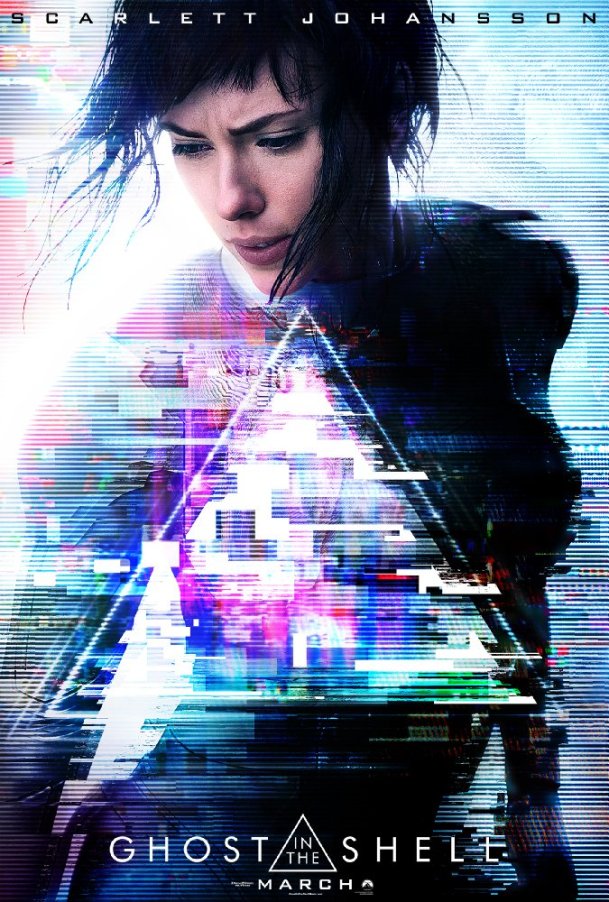
ScarJo in Ghost in the Shell

Since I heard about the extremely controversial casting of Scarlett Johansson in “Ghost in the Shell,” I’ve been about as enraged by it as anyone. At first, I resolved not to see the film in protest. As a woman, I understand how meaningful it can be to see yourself represented in mainstream media. It makes you feel seen and accepted by your society, your people. It makes you feel like an equal and someone who matters. And as a lover of women in general, I don’t want to see any kind of woman shut out of our culture’s media. Every kind of woman, no matter what she looks like or how old she is or where she comes from or who she’s attracted to or what she believes in, deserves recognition and acceptance.

The film is nauseatingly racist. In addition to the blatant racism of casting a white woman in an originally Asian female role, it reportedly attempted to yellow face some of its extras, and possibly even Johansson herself.

I had a friend once who was half Chinese and half Scottish. She was outgoing, excitable, charming, feminine, and beautiful. We took ballroom dance classes together, and that was where I first realized how marginalized Asian women are. The men looked at her like she was a sex toy – old, often married men and this 14 year old girl. They flirted with her and ogled her. She was their favorite dance partner, and it had nothing to do with her dancing ability. Her personality had quite a bit to do with it, but I’m also quite certain that her race made them feel much more confident in treating her like she existed purely for their pleasure.

I often get ads for Asian women from dating sites. I get those more than any other dating site ad. I’ve seen statistics that Asian women are the most fetishized women in America. What comes with that fetishization? Viewing them as non-human.

Which is why it was so deeply offensive for this film’s producers to take an iconic, inspiring female character like Major Motoko Kusanagi and make her the default woman that we always see on our screens, rather than an underrepresented minority who deserve to see themselves as these inspiring people.

But despite feeling so strongly about that, I also couldn’t ignore that it was a female lead, who is meant to carry the film. Now, I don’t mean to say that it is REMOTELY okay that they whitewashed this character. But I kept thinking, how often do we have a female lead in a big-budget, mainstream cyberpunk film? A woman starring in an action film is unusual enough, but what’s even more unusual is a story that focuses on the humanity, or lack thereof, of a female cyborg. The cyborg trope and the question of whether cyborgs and human-like robots should be treated as equal humans has been so deeply explored within the science fiction genre that I’m sick of contemplating those questions. (I’m a sci fi baby.) It’s a very unique way to explore the human condition, and relevant to our modern world.

Continue reading “Why I Think “Ghost in the Shell” Is Racist As F*ck, But I’m Still Planning To See It”

Agents of SHIELD Season 4 Episode 15: Self Control Sneak Peeks [Video]

https://www.youtube.com/watch?v=X3UXwgFoX8E

This week’s episode, #15 Self Control, marks the end of the LMD arc of Agents of SHIELD’s 4th season. After finishing its second plot unit the show will go on hiatus for six weeks, until April 4th. No word yet on what the third and final arc will be titled, or if the series will get a fifth season. I’ll be keeping an eye out for those announcements.

Continue reading “Agents of SHIELD Season 4 Episode 15: Self Control Sneak Peeks [Video]”

The Future of Nashville: Will Rayna Survive and What Does That Mean Going Forward?

nvl508julhal

This is a meta post following Nashville episode 5×08 Stand Beside Me. Spoilers ahead, including for future episodes.

The rumors have been swirling for months that Connie Britton would be leaving Nashville midseason this year, roughly around episode 10. They began last summer, but then Connie seemed to put the rumors to rest by going on Ellen DeGeneres’ show in early January and saying that she was on Nashville for the “duration”. The duration of what, she didn’t specify. The video of Connie’s appearance on Ellen is at the bottom of the post.

Continue reading “The Future of Nashville: Will Rayna Survive and What Does That Mean Going Forward?”

Agents of SHIELD: Who Is The Superior?

enadeer

On Tuesday night’s episode of Agents of SHIELD, Wake Up, Senator Nadeer, one of the high-ranking members of the anti-inhuman group the Watchdogs, tells Dr Radcliffe that in order for her organization to offer him protection, he has to meet The Superior and gain approval. We’ve been teased with the title of The Superior a few times, but haven’t been given a name yet. You can hear the capital letters in the title. They’re making such a big deal of it that it’ll be a let down if it’s not someone we’ve met before. Who’s still alive or easily revivable that would take the Watchdogs side? We haven’t had a movie crossover in a long time. It would be amazing if it was Thunderbolt Ross/William Hurt. William Hurt has no problem with doing TV, and has said that he loves playing the character. General Ross is the current, or most recent former, Secretary of State (if the MCU also had a presidential election in November, and President Ellis has finished his 2nd term). He’s in a perfect position to be The Superior. That would also quiet down some of the uproar about the movies not acknowledging the TV shows. Granted, it’s still within the TV show, but given the way movies are made, this is a reasonable compromise.

Continue reading “Agents of SHIELD: Who Is The Superior?”

Travelers Season 1 Analysis and Speculation

travelerscharphotos

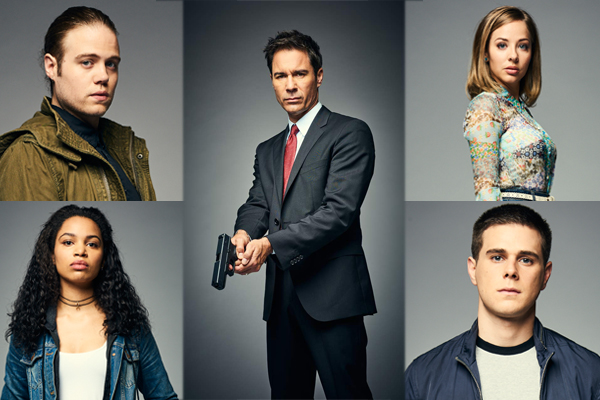
Whew! What a wild ride this season turned out to be! I love it when you get to the end of a season of television, then have to go back and question everything you thought you knew about the previous episodes. They gave us a lot to think about over the hiatus. When Travelers returns, it’ll seem like a different show, now that the Faction’s role has been revealed. All of these changes open up so many new plot lines to contemplate, so many directions the show could take its mythology and characters.

The goals of everyone, as far as we’ve seen, continue to be saving the world, environmentalism, and respect for the sanctity of life. (In a global way, at least. It’s accepted that individuals of a certain class are disposable in order to further the greater good.) They all want a future living somewhere that’s green. It’s the method of achieving that future that’s at stake. At the very least, there will be a power struggle in the future to see whose Grand Plan will be implemented from here on out. There had to be competing philosophies before the director’s decision-making parameters were programmed. The faction or factions are revisiting those alternate philosophies, to see if changing the program’s if>then protocols will achieve better results. We could be in for experimentation and a rapidly changing future, a reign of terror as the faction tries to secure its hold on the director, or civil war as future society fights it out to decide who will be in charge of the director’s decision-making process, or if the director will be making the decisions at all. Another option is for a faction to steer the changes by human reasoning alone.

Continue reading “Travelers Season 1 Analysis and Speculation”

Most Popular Netflix Shows by State: What’s Your State’s Favorite?

netflixmap

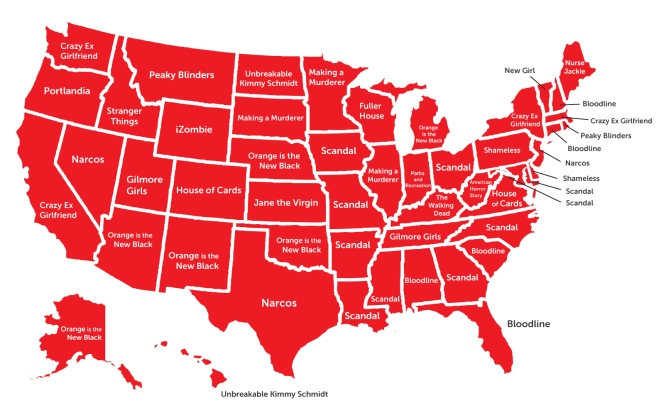
The map above shows the most popular Netflix show in each of the 50 United States, according to research done by HighSpeedInternet.com. They describe their methodology this way:

Our team took the top 75 TV shows on Netflix, cross referenced the shows with Google Trends data, and determined which series was most likely to be streamed on devices near you.

Continue reading “Most Popular Netflix Shows by State: What’s Your State’s Favorite?”

It Can’t Happen Here: Unless It’s Aliens or Has Orange Hair (Audio)

itcanthappenheregraphic

On October 24, 2016, 2 weeks before Election Day, we both attended a local staged reading of the play It Can’t Happen Here, based on the 1936 novel by Sinclair Lewis. The novel, and the play, describe the rise and rule of a charismatic, dogmatic, conservative politician who is eventually elected president. He promises a return to traditional values, but reneges on his promises soon after he takes office, turning the country into a totalitarian regime within a period of a few months. Anyone who doesn’t offer complete, unquestioning loyalty to the new regime is imprisoned or executed.

This may sound like a drastic scenario, something that “can’t happen here,” but Lewis wrote the novel originally because he was watching this very thing happen in Nazi Germany at the time. The original stage adaptation was created the following year. The original 1983 TV miniseries about an alien invasion,V, was also based on It Can’t Happen Here (and the later reboot series). V’s creator, Kenneth Johnson, was inspired by Lewis’ work, but the network executives at NBC thought the story would be more interesting if the American fascists from the book were turned into aliens for TV.

Continue reading “It Can’t Happen Here: Unless It’s Aliens or Has Orange Hair (Audio)”